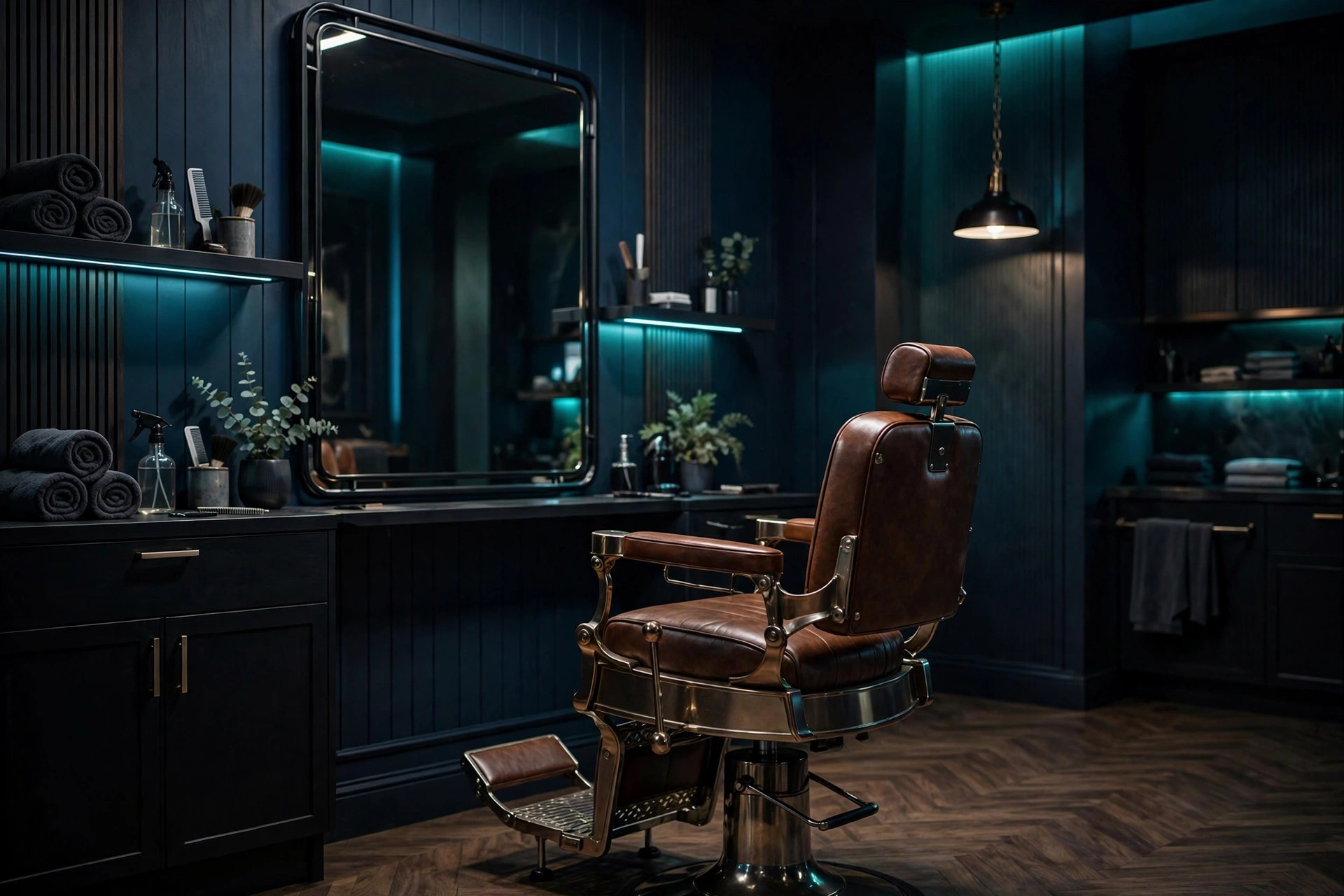
It is 10 a.m. on a Saturday. Your best stylist is booked back to back, the color is mixed, and the 10 o'clock simply does not show. That hour is gone — the product, the stylist's time, and the walk-in you turned away because the slot looked taken. Multiply it across a team and a year and no-shows stop being an annoyance. They are a line item.
How big is the problem, really?
Smaller than folklore says — and still worth fixing. Trafft's barbershop marketing guide, citing the Zenoti 2026 Beauty and Wellness Benchmark Report, reports that barbershop no-show rates held at about 4% in 2025, with cancellations at another 4%. Read that carefully: roughly 8% of booked appointments vanished before they happened, in an industry that already runs tight schedules — and cancellations had doubled from the year before. On a full book, 8% is most of a day's chair, every week.
So the question is not whether no-shows cost you. It is whether protecting the chair costs you more — in clients who see a deposit request and book somewhere else.
The honest answer: clarity does not scare good clients
A widely shared guide to stopping salon no-shows on Medium makes the core argument well: the same person who puts a card down to hold a restaurant table shows up for the table. A deposit changes an appointment from a casual plan into a small financial commitment, and people treat commitments differently. The guide also notes the flip side owners quietly recognize — the clients who push back hardest on any policy tend to overlap with the clients who no-show.
What actually scares clients is not the deposit. It is surprise. A fee they never saw, a policy explained only after they cancel, a charge with no warning. A policy shown clearly before they book — on the booking page, in the confirmation, in plain words — reads as professional. Salons and barbershops clients admire run policies exactly like this. Yours can too.
Deposit, cancellation fee, or card on file?
A deposit credited toward the service is the gentlest structure and the one we recommend for most small shops. The client pays a portion up front; it comes off the bill at the appointment, so a client who shows up never pays a cent extra. It is prepayment, not a penalty, and it is the easiest version to explain.
A deposit with a refund window is the middle option the Medium guide outlines: refundable if they cancel with, say, 48 hours' notice, kept if they cancel late or no-show. Fair on its face, and it filters casual bookings for long services — color, extensions, party bookings — where one empty slot hurts most.
Card on file plus a cancellation fee charges nothing up front and bills the fee only if they break the policy. It protects the chair with zero friction at booking, but enforcement after the fact is where shops go soft. The advantage of a policy applied automatically by your booking system — the same point the guide makes — is that it removes the awkward front-desk conversation entirely. The system charges what the client agreed to; nobody has to be the bad guy at the counter. Whatever you choose, choose one structure and apply it to everyone, every time. A policy enforced only when the owner is annoyed is not a policy.
Policy wording you can copy
"To hold your appointment, we take a deposit of [amount / percentage], which comes off your total at your visit. Need to move your appointment? Reschedule or cancel at least 48 hours ahead and your deposit moves with you or is refunded in full. Cancellations inside 48 hours, and missed appointments, forfeit the deposit — that time was held just for you and cannot be rebooked. By booking, you agree to this policy."
Adjust the amount and the window to your shop, then put that exact text in three places: the booking page before the confirm button, the confirmation message, and your website's services page. If a fee is ever disputed, the words the client agreed to at booking are your whole defense — which is why they have to exist before the booking, not after the problem.
Your booking setup has to support the policy
None of this works on a paper book and a prayer. You need online booking that can take the deposit or store the card, send the confirmation with the policy attached, and fire the reminders that prevent the honest forgetters — most no-shows are forgetfulness, not malice. We compared the main options in our guide to the best booking systems for small salons; whichever you pick, deposits, card-on-file, and automatic reminders are the three features that matter for this problem.
A lower-risk way to start
If a full policy still feels like a leap, trial it where it hurts most. For 60 days, take deposits only on new clients, Saturday appointments, and services longer than two hours — and tell clients why in one plain sentence: those are the slots that are hardest to refill. Then track two numbers side by side: no-shows on deposit bookings versus no-shows on everything else. Let your own book settle the argument instead of internet opinions, ours included. Most owners who run the trial keep the policy, because the deposit bookings simply show up. And if your numbers say otherwise, you have lost nothing — the trial cost you no clients and bought you the truth about your own chairs.
We build salon and barbershop websites with booking connected and the policy written in, starting at $300 setup plus a $99 monthly care plan — free concept first, before you pay anything.
Request a free conceptBooking deposits: common questions
How much should the deposit be?
Enough to sting a little, not enough to feel like a second price. Common structures are a flat amount (for example $20–$30) or a percentage of the service, credited toward the bill. For long, expensive services, a percentage makes more sense because the slot you are protecting is worth more.
Should regulars have to pay it too?
A workable pattern: apply deposits to new clients, online bookings, and peak slots first — the highest-risk bookings — and keep your standing regulars on their usual arrangement. Just write down who the policy covers and apply it consistently within that group.
What if a good client has a real emergency?
Your policy can hold a door open without breaking: one courtesy reschedule, at your discretion, stated as a courtesy rather than a right. Owners who never bend become a story clients tell. Owners who always bend have no policy. Once, kindly, is the line most shops land on.
Will a deposit policy hurt my Google reviews?
A surprise fee hurts reviews. A clearly stated policy, agreed to at booking and applied evenly, rarely does — clients review the haircut and how they were treated, and a professional policy is part of being treated like the booking matters. What draws one-star anger is inconsistency: charging one person and waiving it for another.
Get your exact quote
Send us your details and we reply with an exact quote.
Want booking that protects the chair?
We will connect your booking, write the policy into the pages, and set up the reminders — and show you a free concept of the site first.