
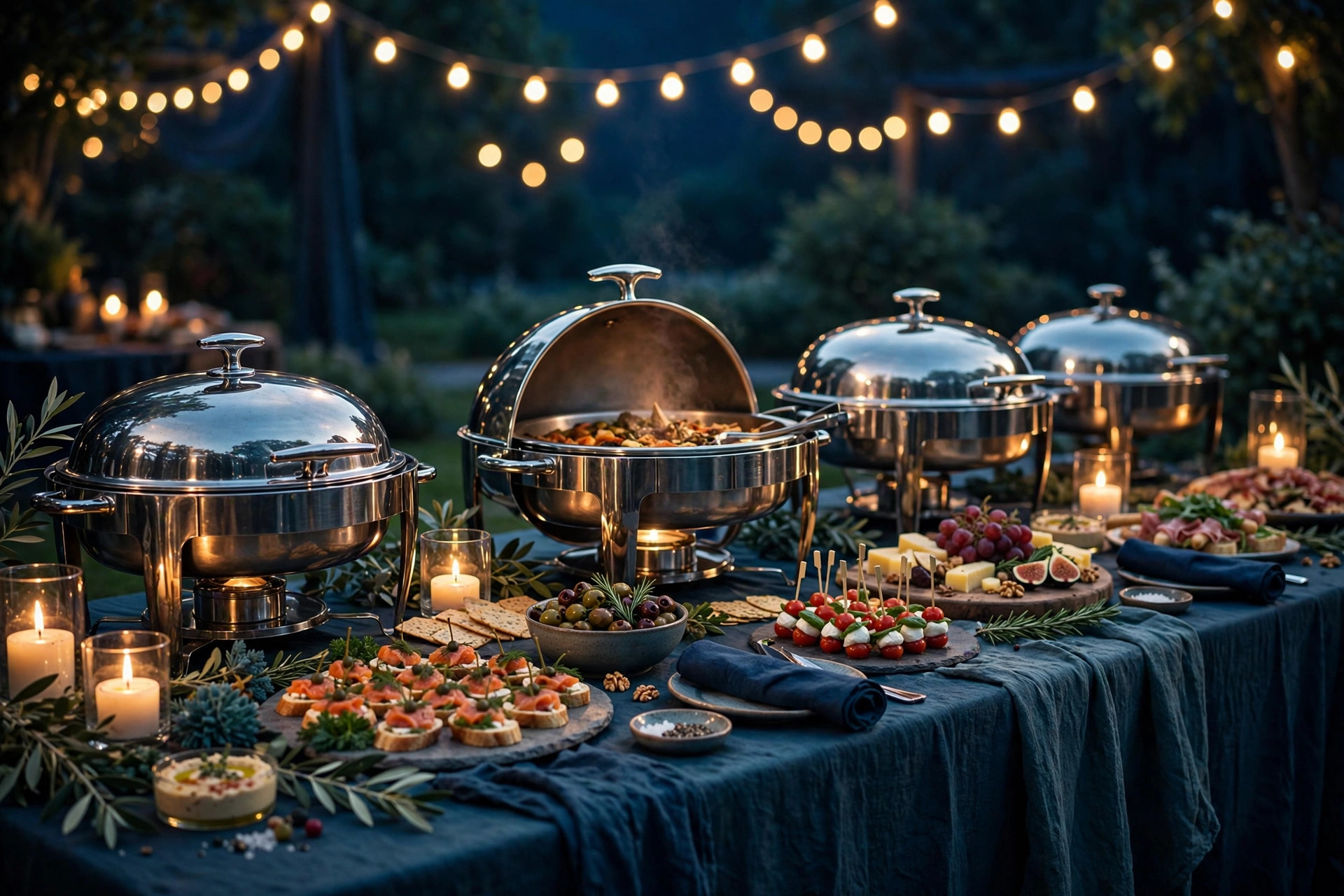
Think about who books catering. It is an office manager feeding forty people next Thursday. A bride's mother planning a rehearsal dinner. An HR assistant with a holiday party and a fixed budget. None of them are browsing for fun — and that changes everything about how your website should treat them.
Marketing guidance for caterers, like AGR Technology's guide to catering bookings, makes the point that catering searches are intent-based: the searcher usually has an event date, a rough guest count, and a budget, and needs to book someone fairly soon. People in that position do not want to explore your brand. They want to answer five questions fast and send one form. If your site makes them phone during business hours and play tag, a competitor with a real catering page gets the booking.
Why sending catering shoppers to your homepage loses them
Your homepage is built for tonight's diner: the menu, the vibe, the hours. A catering shopper landing there finds none of what they came for — no packages, no capacity, no per-person pricing, no way to ask for a quote. So they do what busy people do. They close the tab and open the next result.
It is not that your food lost. It is that the office manager had four tabs open and a deadline, and the restaurant that answered her questions in sixty seconds won. A dedicated catering page is how you become the easy yes.
What a catering page needs
Sample menus and ready-made packages
Show two or three built packages — the office lunch, the family-style dinner, the full event spread — with what is included. Preset packages beat a blank page because they remove decision work for a busy buyer; Fast Casual's holiday catering guide makes the same point about bundling your best sellers into simple holiday packages. "Starting at" per-person pricing is enough to keep you in the running.
Capacity and minimums, in plain numbers
Smallest group you will cater, largest you can handle, private-room capacity if you have one, and your order minimum. A shopper who cannot tell whether you feed 12 or 200 will assume the answer is "not my group" and move on.
Photos of real events, not stock food
Your buffet line at an actual office lunch. Your back room set for a birthday. Real photos answer the question every booker is really asking: "Will this look taken-care-of in front of my boss / my family?"
Lead time and how booking works
How far ahead you need the order, whether you deliver and set up, and the three steps from inquiry to confirmed event. If you can take a group of 15 on two days' notice, say so loudly — short lead times win the last-minute bookings everyone else turns down.
The quote-request form is the whole point
Everything on the page points at one action: a quote-request form. AGR Technology's catering guide treats the quote request via a dedicated landing page as the conversion that matters — the thing ads and searches should land on — and the same logic applies to the traffic you get free from Google.
Ask for the fields a real quote needs, and no more: name, email, phone, event date, guest count, event type, event location, and a notes box for budget and menu ideas. Every extra field costs you submissions. Then close the loop on the page itself: state when they will hear back — "we reply with a quote within one business day" — and keep that promise. A form that disappears into silence teaches the whole office park not to bother.
Holiday timing: the season books earlier than you think
Fast Casual's catering guide is blunt about the calendar: November and December bring the year's biggest wave of corporate group orders, and the restaurants set up well before the rush capture it. Office managers start shortlisting in the fall. If your catering page, holiday packages, and correct holiday hours are live by October, you are in the pile they choose from. If you are updating them in mid-December, you are decoration.
Two more habits from the same guide worth stealing. First, follow up after every event with a thank-you and one question about the next one — holiday clients book again in January and all year when someone remembers them. Second, when a marketplace app delivers a catering customer to you, give that customer a reason to come direct next time — a card in the bag with your catering page address. Direct bookings skip the commission and put the relationship in your name.
After the form: speed is the close
Getting the inquiry is only half the booking. The other half is how fast and how completely you answer it. The office manager who sent your form sent two others, and the first complete reply back — a package, a price, what is included, and the two or three questions you still need answered — is usually the one she can forward to her boss for a yes. Set a simple routine: form submissions land in an inbox someone checks twice a day, a saved reply template carries your packages so nobody composes from scratch, and a date is not held until you have a deposit or a clear yes. Put those steps on the catering page itself. A booker who knows exactly what happens next trusts the operation more. The page sells the process as much as it sells the food.
One holiday party can pay for a website several times over. Nova Pulse Media sites start at $300 setup plus a $99 monthly care plan, and a catering page with a quote form is a standard part of how we build for restaurants. General pricing is in our website cost guide.
Request a free conceptCatering bookings: common questions
Should I put catering prices on the page, or make people ask?
Put “starting at” per-person prices or package prices on the page. Bookers working with a fixed budget eliminate every option that hides pricing, because they cannot take 'call us' to their boss for approval. Exact quotes still happen through the form.
How much lead time should I require?
Whatever your kitchen can honestly hold — and say the number on the page. If you can flex for smaller groups on shorter notice, say that too. Vague policies (“call for availability”) lose to a competitor whose page says “48 hours for groups under 25.”
I already get catering orders through an app. Do I still need a page?
Yes — for the repeat business. The app owns that customer relationship and takes a cut of every order. Your own page is where the second and third bookings should happen, at full margin, with the follow-up in your hands.
What if I only want a few events a month?
Then the page matters more, not less. State your capacity honestly — “we take four private events a month” — and let the form qualify people while you work. Scarcity stated plainly reads as in-demand, not as a problem.
Get your exact quote
Send us your details and we reply with an exact quote.
Want catering inquiries landing in your inbox, not your voicemail?
We will build the page, the packages layout, and the quote form — and show you a free concept of the whole site before you pay anything.