
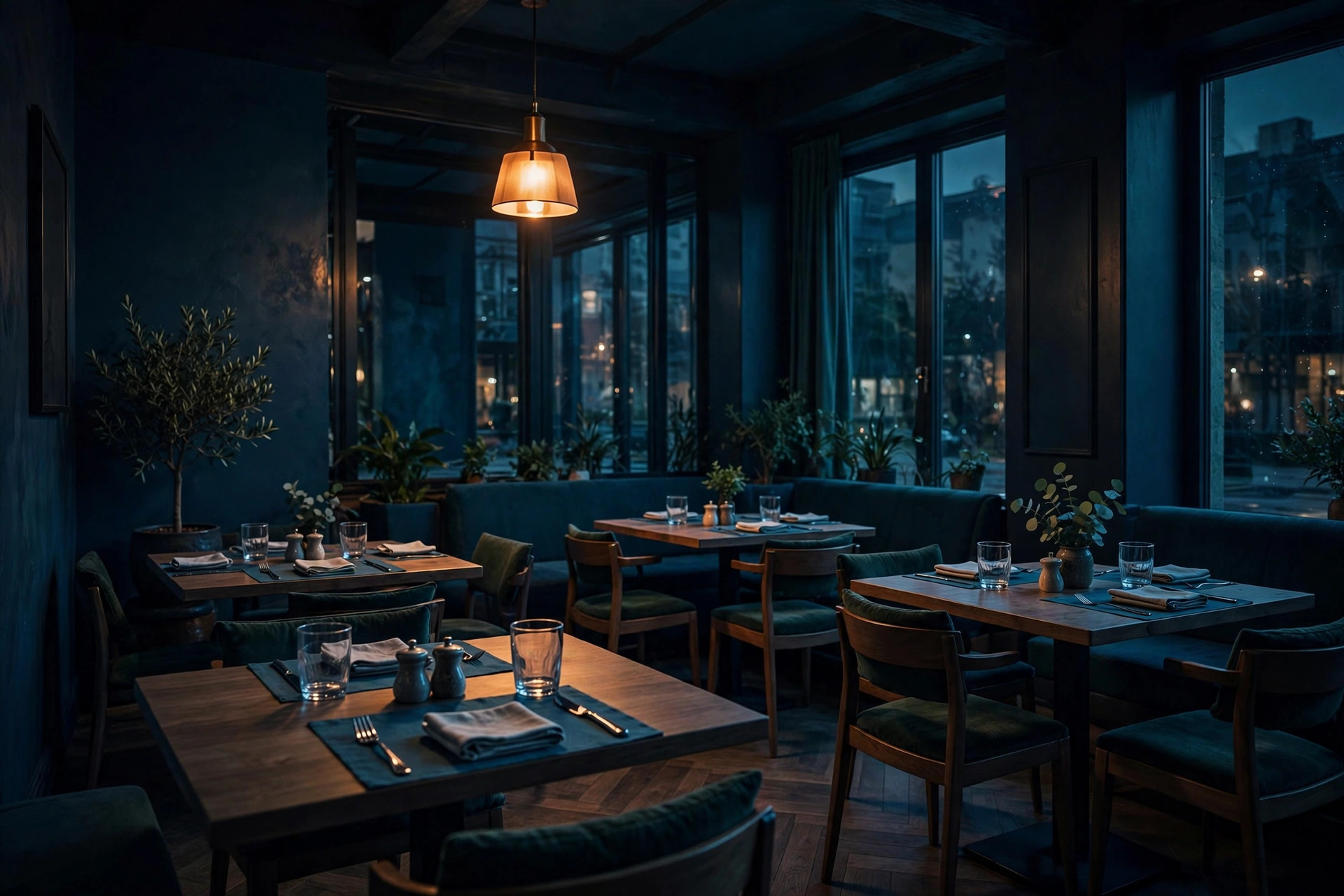
Every restaurant, café, and food truck in the Tri-Cities has a version of the same problem: a daypart that limps. Friday dinner is packed. Tuesday is a ghost town. The prep is done, the crew is clocked in, and the till is quiet.
The usual response is a blanket discount — 20% off Tuesdays, half-price apps, a coupon blast to everyone. It feels like action. It usually makes the underlying problem worse. This guide covers why, and what to do instead: loyalty nights, event nights, and a customer list you own. Much of the thinking below echoes a practical slow-season marketing guide published on Medium, applied to a Tri-Cities calendar.
Why blanket discounts train customers to wait for deals
A public, predictable discount teaches a lesson, and customers are good students. If Tuesday is always 20% off, Tuesday's regulars learn to never pay full price — and some of your full-price customers migrate their visits to the cheap day. You end up busier on the day you make the least, and quieter on days that used to carry you.
There is a second problem: margin. A slow day already runs on your thinnest numbers. A blanket discount comes straight off the top of every ticket, including the tickets from people who would happily have paid full price. The Medium guide puts the pattern plainly: when every slow period becomes a percentage off, customers start waiting for the next promotion instead of seeing the normal value of the restaurant. Discounting feels like marketing, but done this way it is mostly a pay cut you gave yourself.
First, find the real slow spot
Before you build anything, check whether you have a slow season or a slow daypart. Many owners who say "business is slow" actually mean Tuesday lunch is slow while Friday dinner turns people away. Those are different problems with different fixes.
Look at two or three weeks of your own sales by day and by meal. Circle the exact windows that limp. Everything below is aimed at a specific window — a named day, a named crowd — not at "business in general." A Tuesday lunch problem might be office workers and crews. A slow weeknight dinner might be families. The offer, the message, and the timing all change with the answer.
Loyalty nights: reward your regulars, not the whole internet
The alternative to a public coupon is a private reward. Your best customers — the ones who already come twice a month — get a reason to add one more visit, on your slow day, that strangers never see. A loyalty night, a members-only special, a reward that expires when the slow window ends. It fills seats without teaching the whole town to wait for a sale.
Does it work? Take this as what it is — a second-hand story, not a guarantee. A restaurant marketing video on YouTube breaks down a case study the presenter found on Reddit: a restaurant whose Tuesdays were running at roughly 40% of capacity sent one loyalty offer by text to about 200 of its own existing contacts, and those quiet Tuesdays reportedly became the restaurant's third-busiest day. One text, to people who already liked the food. Whether or not your numbers match that story, the mechanics are sound and cheap: the offer went to regulars, for a limited window, and it was never a public discount.
Event nights: a reason to come that is not a lower price
People do not need a coupon to leave the house. They need a reason. Trivia night, a local singer on the patio, a tasting of a new menu item, family night with a set bundle — each one gives a specific crowd a specific night to plan around.
Two rules make event nights work. First, put the event on your website and Google profile, not only on social media, so someone searching "things to do in Kennewick tonight" or checking your hours actually finds it. Second, run it on a schedule. A one-off event is a party; a weekly event is a habit, and habits are what fill slow days in month three, not just week one.
Own the list you invite them with
Notice what the loyalty story depended on: the restaurant had about 200 customers it could text directly. That list is the asset. Social media reach is rented — the platform decides who sees your post, and it can throttle you, change the rules, or suspend the account. An email and text list built from your own customers belongs to your business.
A website is where that list gets built: a simple signup — "join the list for first word on specials and slow-day rewards" — on the home page, the menu page, and the ordering confirmation. Table tents and a line on the receipt feed it in person. Then, when Tuesday needs help, you are not shouting into an algorithm. You are sending one message to people who asked to hear from you.
The Tri-Cities winter version of slow
Around here, the slow season has a date range: the weeks after the holidays, when it is dark by five, cold enough to keep people home, and every household budget is recovering from December. January and February do not care that your food is good.
The move is to build the system before you need it. Get the list growing in the fall. Have the loyalty night and the event night already running when January arrives, so you are inviting known regulars to known events instead of inventing a desperate promotion in the worst week of the year. Slow-season survival is mostly a fall project.
The events page, the signup form, the loyalty night details — they need one home that you control. Nova Pulse Media builds restaurant websites starting at $300 setup plus a $99 monthly care plan, and we show you a free concept before you pay anything.
Request a free conceptSlow days: common questions
Won't a loyalty night just reward people who would have come anyway?
Some of them, yes — and that is fine. The goal is moving one of their visits onto your slow day and adding an extra visit a month, not converting strangers. A regular who comes Tuesday instead of only Friday is a real gain, and a private reward does not reset the price expectations of everyone else.
How big does my list need to be before this works?
Smaller than you think. The case study mentioned above involved about 200 contacts. If you have even 80 to 100 real customers who opted in, a well-timed message about a specific night can move a slow day. Start collecting now; the list compounds.
Should I never run a discount, then?
Discounts have a place when they are rare, targeted, and time-boxed — a specific offer to a specific list for a specific night. What hurts you is the standing public discount that runs every week until customers treat the sale price as the real price.
What if I do not have a website to build a list on?
That is the first fix, and it is cheaper than most owners expect — our website cost guide breaks down real numbers. Until then, a signup sheet at the register and a QR code on the receipt still work; the website just makes it automatic.
Get your exact quote
Send us your details and we reply with an exact quote.
Want slow days that fill themselves?
We will build the website that holds your events, your loyalty night, and your list — and show you a free concept before you spend a dollar.