
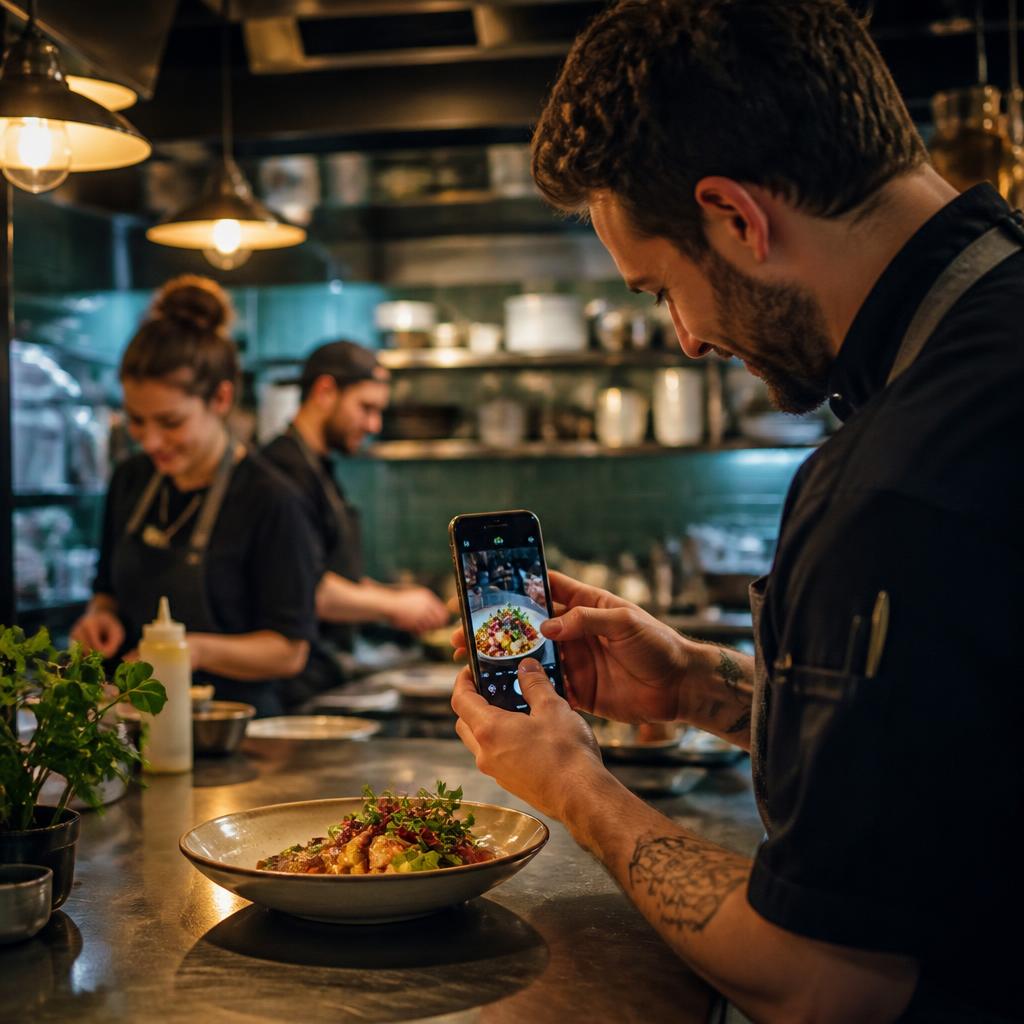
A restaurant does not need a film crew to make a useful short video. A phone, a clean lens, steady hands, and one clear idea are enough to begin. The point is to help someone understand the food or experience, then make it easy to find the menu, order, reserve, or ask about an event.
Show the food as it is served
Close shots can show texture, color, steam, a garnish, or a dish being carried from the pass. Keep the camera still long enough for viewers to see what is happening. Use natural window light or the restaurant’s existing lighting where possible, and avoid filters that make the meal look unlike what a guest will receive.
A quick clip can focus on one item, a daily special, or a part of the menu customers often ask about. Include the item’s name in the caption when it helps, and check that the menu or ordering page has the same current details.
Let people see the process and the team
Preparation, plating, packing an order, setting a table, or opening the dining room can give a viewer a useful sense of the work and atmosphere. Brief clips of the people behind the service can make the business feel familiar. Ask staff before featuring them, and get permission before recording customers or sharing identifiable details.
Keep the footage honest. Do not stage a process in a way that suggests a service or dish is different from what the restaurant actually provides. A real glimpse is more useful than a promise a customer might misunderstand.
Make phone-shot clips easy to watch
- Choose one subject and one point for each clip.
- Wipe the phone lens, hold the phone steadily, and record a few seconds at a time.
- Use vertical framing for short-form social feeds and keep important details away from screen edges.
- Add concise on-screen wording or captions when they help viewers follow along without sound.
- Review the clip before posting for accuracy, permissions, and background details.
Post where your customers already look
A restaurant can adapt a suitable clip for TikTok, Instagram Reels, and YouTube Shorts. Each platform’s tools and display can change, so preview the post, check the caption and cover, and make sure the account information is current. Reusing the same source footage is practical; adjust the text or crop when a platform needs it.
Do not treat views as the whole result. A clip can be entertaining without bringing a customer closer to an order. Give the viewer a relevant next step and make the route work on a phone.
Link the video to an order or inquiry path
Use the profile link or a clear link near the post to send people to the page that fits the video: the current menu, online ordering, reservations, catering details, or the restaurant’s main site. Avoid sending every viewer to a generic page if a more specific destination answers their question faster.
Check the destination yourself. Confirm that it loads on a phone, the menu or offer is current, and the order or contact button works. If you want to understand which posts lead to site visits, use consistent tagged links and review the resulting activity carefully; a click is not the same as a completed order.
Start with real footage the team can capture during normal work, publish only what is accurate and approved, and review the customer actions that matter to the restaurant. There is no guaranteed posting schedule or result that fits every business.
A simple first-week plan
Pick three subjects: one dish, one step in the process, and one person or detail that helps explain the experience. Capture a few short clips for each, choose the clearest take, and write a caption that describes what viewers see. Post the clips on the channels the restaurant can maintain, then link to the relevant menu, order, or inquiry page.
After posting, note questions customers ask and whether the linked page is receiving useful visits or inquiries. Use that information to decide what to film next. Keep the process small enough to repeat without disrupting service.
Get your exact quote
Tell us about your restaurant and what you want your website or short-form content to help customers do.